 MiniPrinter EDU
 MiniPrinter XL
 MaxiPrinter
 Constructimeter
 Laboratory
 Printable Mortar
 Buildings
 Urban Furniture
 Technical Work
How 3D Printing accelerates emergency reconstruction?
To address logistical hurdles in disaster-stricken areas, the MaxiPrinter provides a mobile concrete 3D printing solution that builds directly on-site. The ReGen project showcases this effectiveness with its adaptable modular housing. This technology is ideal for emergency reconstruction, delivering speed, strength, and durability without the constraints of complex supply chains.
Published on 16 February 2026, 7 min to read
Summary
- 1. Introduction – Rebuilding faster, better, and sustainably
- 2. The challenges of emergency reconstruction
- 3. Construction 3D Printing: A concrete response
- 4. Typical applications in reconstruction: The “ReGen” project
- 5. Local production and simplified logistics thanks to a Mixing Plant
- 6. Rebuilding better
- 7. Conclusion
Introduction – Rebuilding faster, better, and sustainably
Every year, natural disasters, conflicts, and humanitarian crises destroy thousands of homes and essential infrastructure. In the face of such urgency, reconstruction must be rapid, efficient, and sustainable, all while accounting for local constraints: a lack of skilled labor, limited access to materials, and often degraded supply chains.
In this context, construction 3D printing represents a major breakthrough for rapid and sustainable rebuilding. By enabling building directly on-site, without formwork or the massive transport of materials, this technology drastically reduces both timelines and costs. It paves the way for a more agile, local, and resilient reconstruction process, capable of meeting immediate needs while preparing for a more sustainable future.
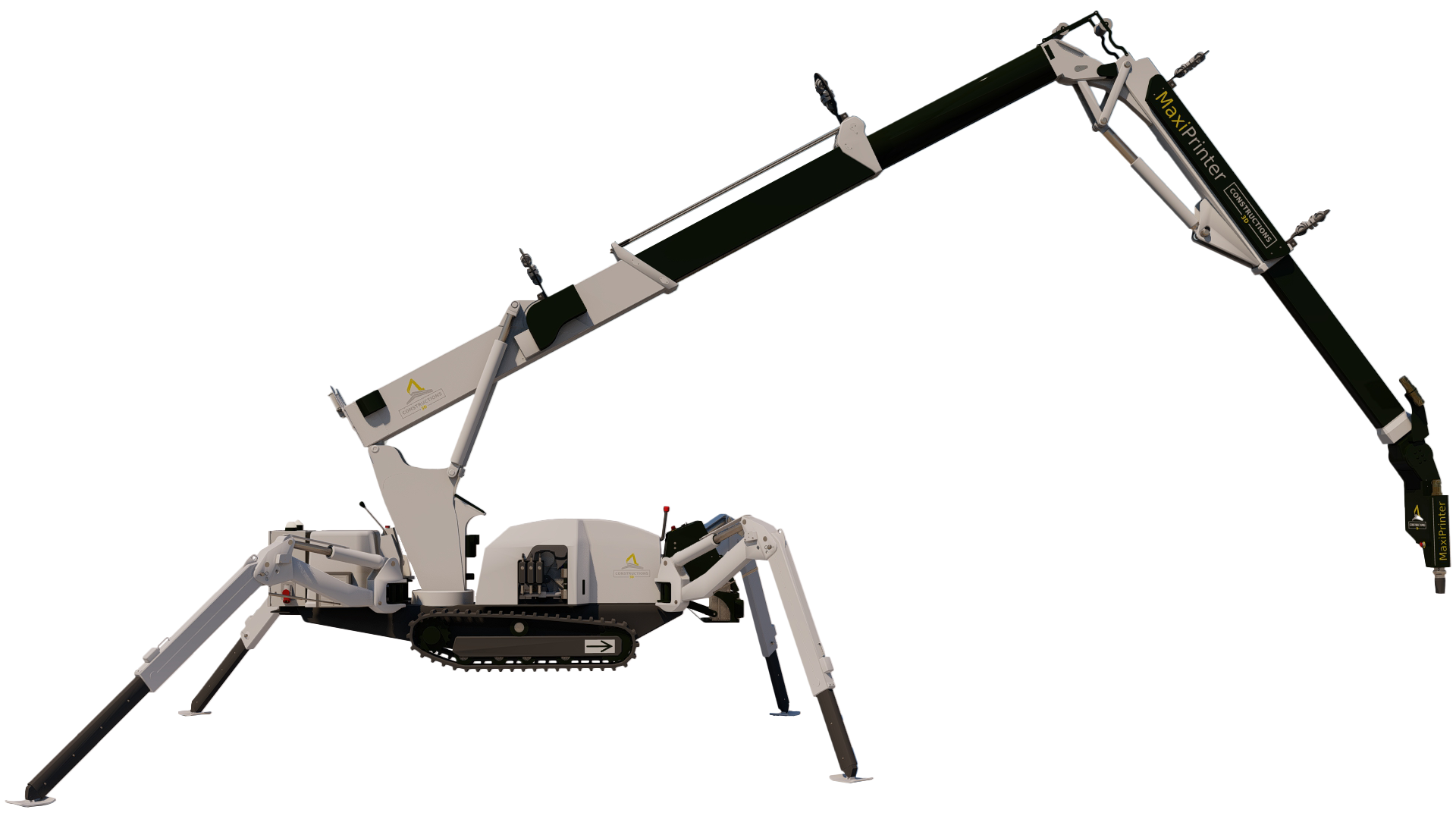
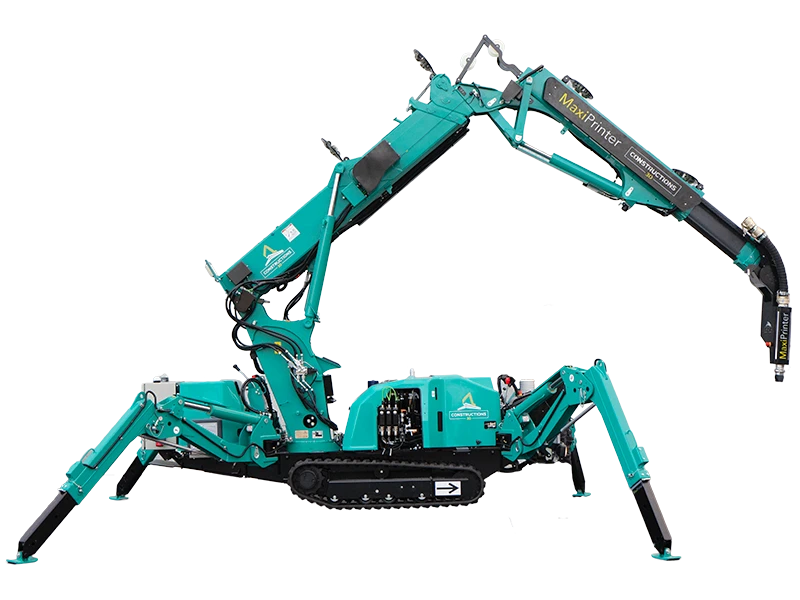
This is precisely the logic behind the MaxiPrinter, the mobile concrete 3D printing solution developed by Constructions-3D, designed to be deployed in the field and operational within a few hours.
The challenges of emergency reconstruction
Rebuilding after a disaster is not just about reconstructing walls: it is about restoring a living environment, a sense of security, and a foundation for economic recovery. However, crisis contexts impose extreme constraints.
Logistical access is often limited, supply chains are weakened, and skilled labor is scarce or mobilized on other priorities. Materials must be available locally and manageable without heavy infrastructure. Added to this are critical deadlines: every day counts when it comes to rehousing, treating, or protecting populations.
Traditional construction methods struggle to meet these requirements: they require formwork, bulky equipment, and complex planning. Weather conditions, unstable ground, or a lack of electricity further aggravate these difficulties.
Faced with these realities, reconstruction actors are seeking modular, quick-to-deploy, and autonomous solutions capable of adapting to all types of environments.
Construction 3D Printing: A concrete response
Construction 3D printing disrupts traditional building methods. By extruding concrete mortar layer by layer from a digital model, it allows to build directly on-site, without formwork, molds, or temporary structures.
This approach profoundly transforms the way we build:
• Speed of execution: Up to one home per day can be printed with each deployed MaxiPrinter.
• Labor reduction: Two operators are sufficient to pilot the machine and supervise the process. Thanks to the ease of use of Constructions-3D equipment, these operators can be trained in just two weeks.
• Resource optimization: Less waste, less transport. A single locally produced printing material is enough to rebuild, considerably simplifying the supply chain.
• Geometric flexibility: The design can be adapted to the needs of the terrain, the climate, or the function of the building, with curved shapes, integrated reinforcements, and variable thicknesses.
By combining these advantages, concrete 3D printing becomes a rapid intervention tool capable of producing solid, reproducible, and durable buildings while exploiting local materials adapted to the context.
It is this promise, printing buildings where they are needed, when they are needed, that makes 3D printing a concrete and strategic response for emergency reconstruction.
Typical applications in reconstruction: The “ReGen” project
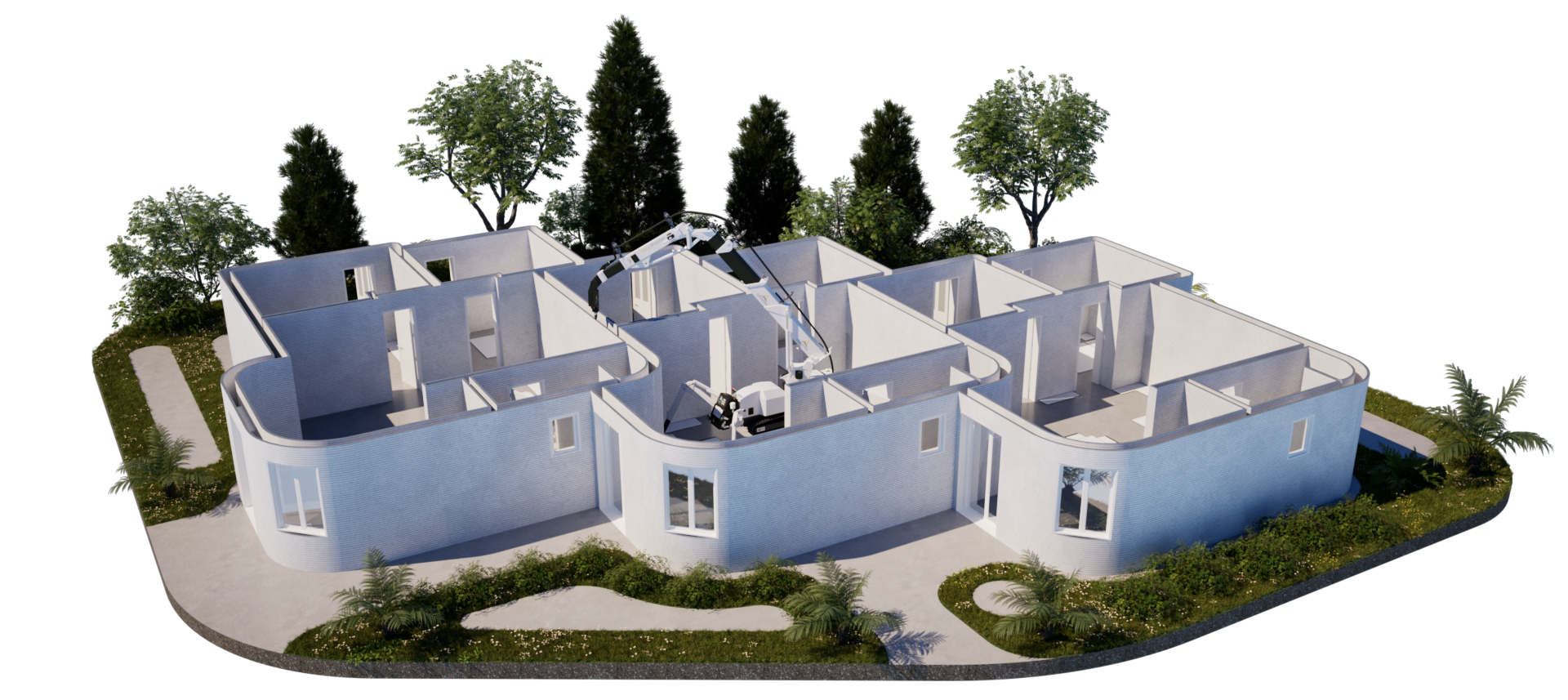
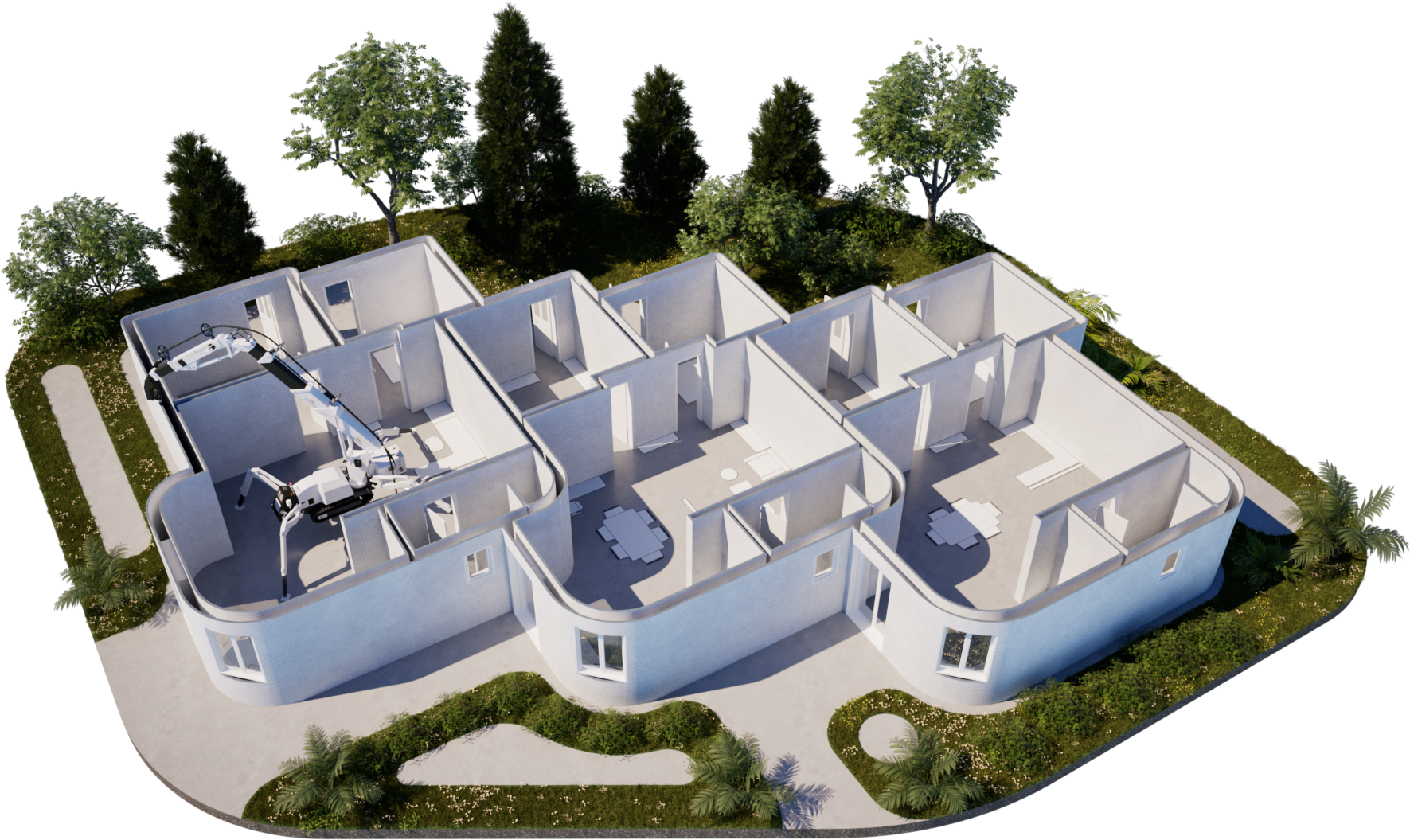
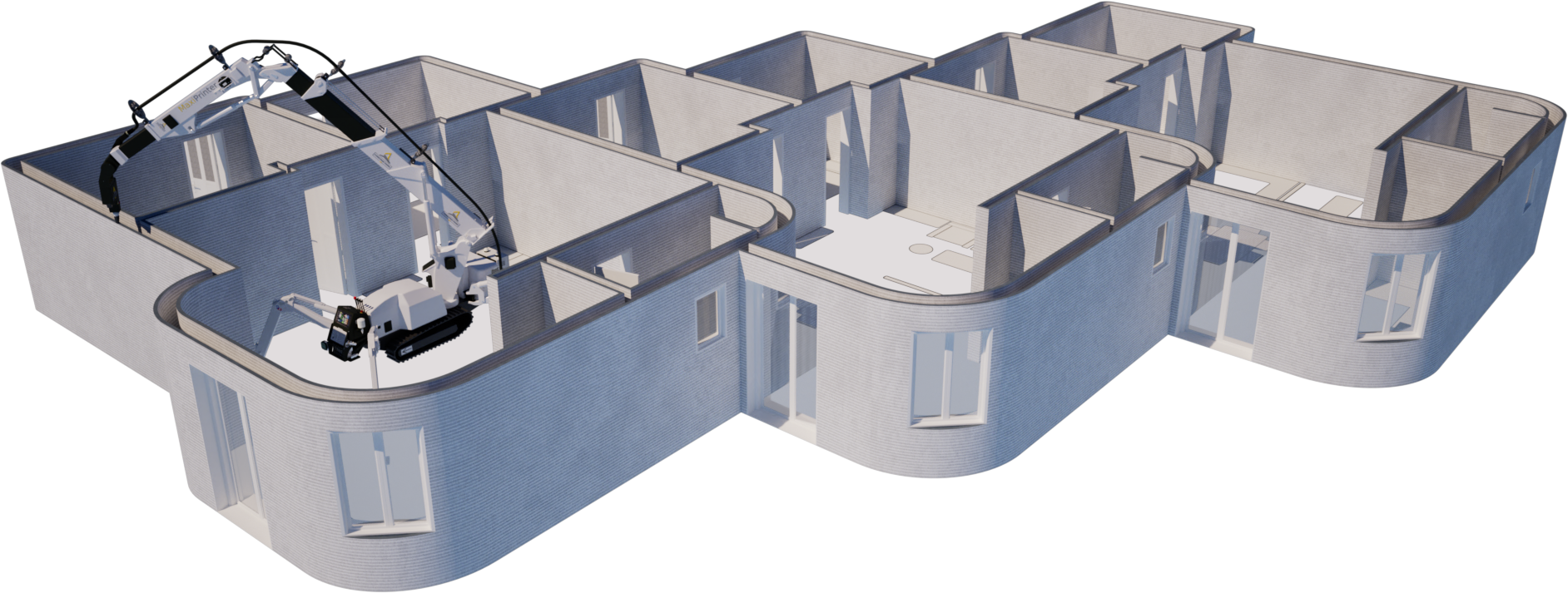
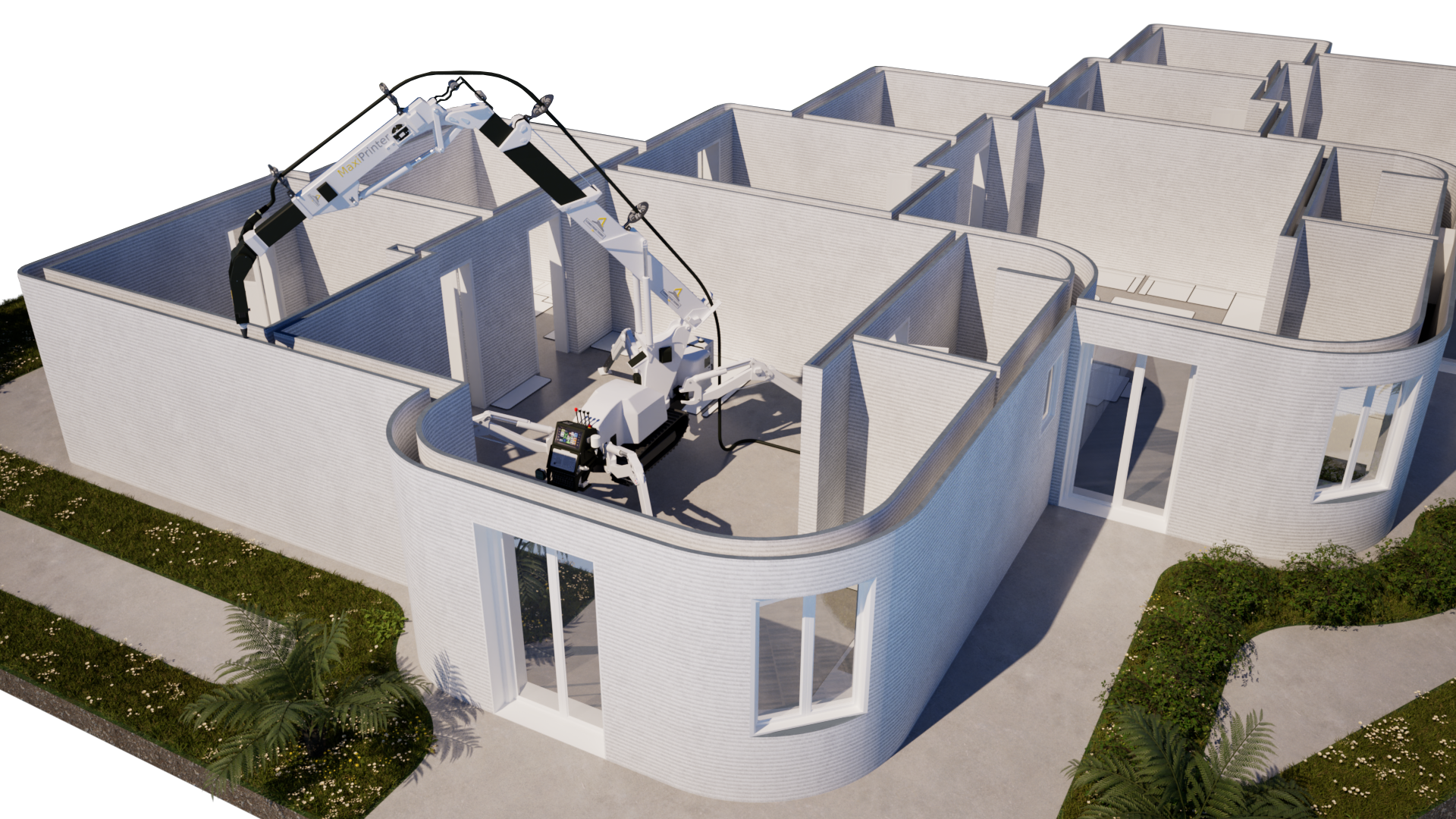
The ReGen project perfectly illustrates the potential of concrete 3D printing applied to rapid and sustainable reconstruction. Designed by Constructions-3D, this model includes a series of terraced houses of approximately 70 m² each (approx. 750 sq ft) each, entirely printable in a single day per unit thanks to the MaxiPrinter.
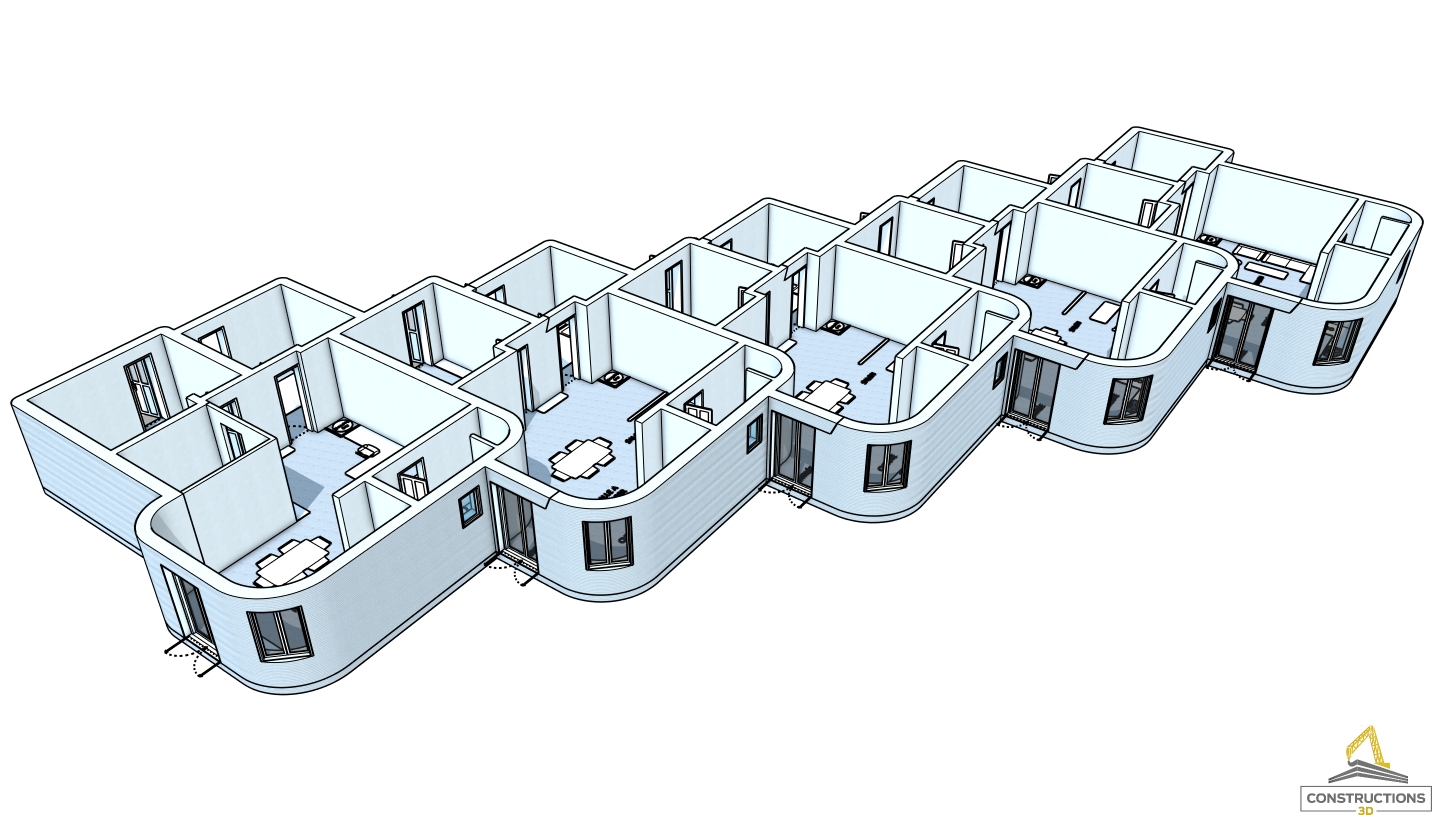
Each unit integrates a bright and open central living room, a functional kitchen, two to three bedrooms, and compact sanitary spaces. They are designed to comfortably house a family of 4 to 5 people. Their modular design allows the number of units to be adapted as needed to print entire neighborhoods of sustainable housing in just a few days.
The ReGen approach is based on three principles:
• Speed: A complete construction site of several homes can be completed in just a few days.
• Rationality: Each module is optimized to limit travel, requiring only one machine position per printed home.
• Sustainability: The printed walls can receive integrated insulation and are designed to provide excellent thermal performance and great longevity.
Designed to be replicable in any context, ReGen demonstrates how the MaxiPrinter can transform emergency reconstruction into a true sustainable reconstruction project, combining efficiency, modernity, and resilience.
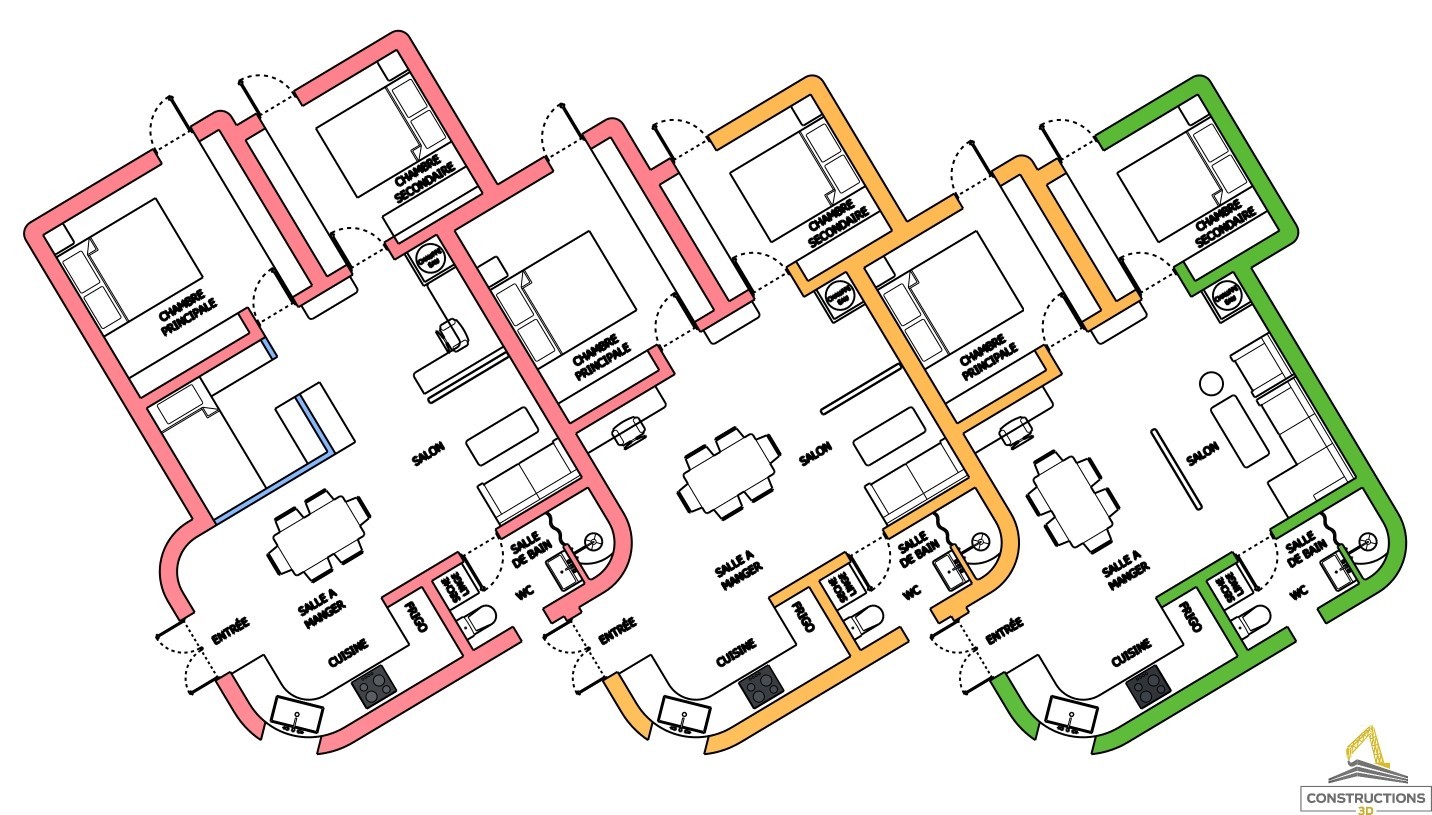
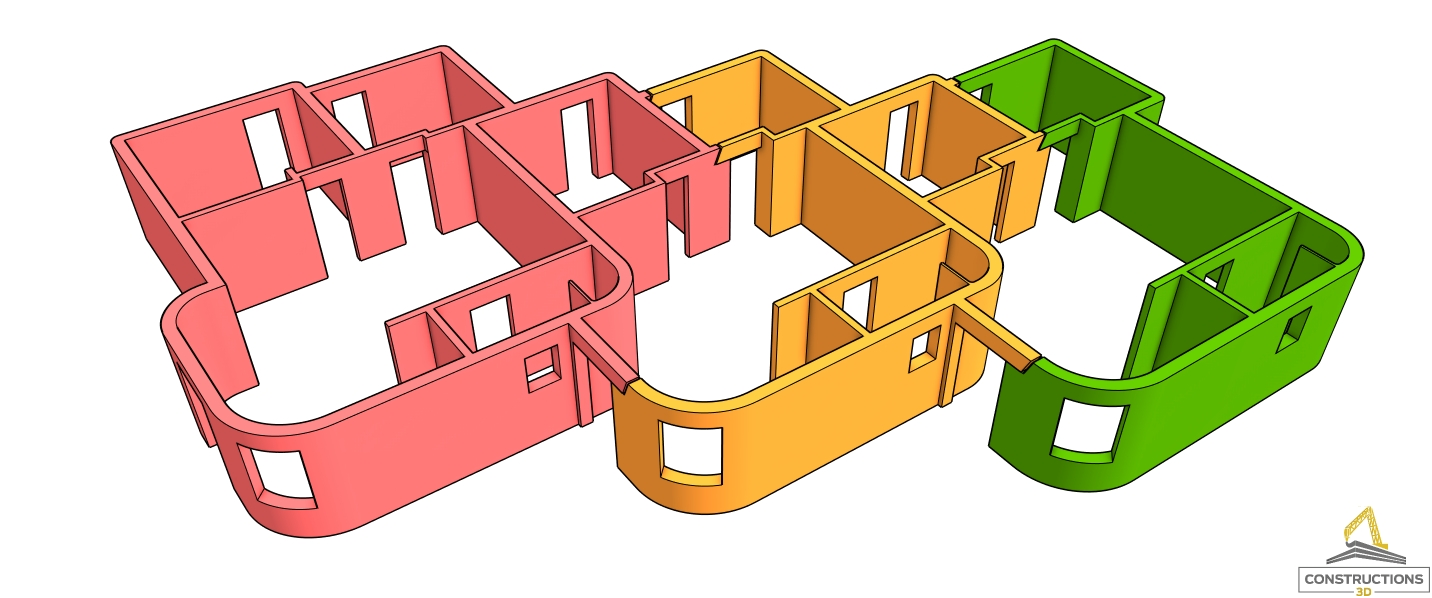
The ReGen project relies on 3 types of modules: 2 end modules and a central module. The central module, which is also the fastest to print, can be replicated infinitely to create as many homes as necessary.
Here is the summary table for the printing of the various modules:
| Module | Starting (green) | Middle (yellow) | Final (red) |
|---|---|---|---|
| Printing time | 12 hours | 16 hours | 26 hours |
| Material quantity | 10 tons | 14 tons | 21 tons |
Additionally, increasing the size of a Regen project significantly improves its economic and operational performance: as the configuration expands, the unit cost and printing time per module decrease. This scaling up also simplifies overall logistics.
Here are 3 examples of possible project configurations:
| Number of modular units | 3 | 9 | 15 |
|---|---|---|---|
| Number of rehoused individuals | 12 | 36 | 60 |
| Printing time | 54 hours | 150 hours | 246 hours |
| Material cost | 18 000 € | 50 000 € | 83 000 € |
Local production and simplified logistics thanks to a Mixing Plant
Using a mobile mixing plant profoundly transforms the emergency reconstruction scenario with the MaxiPrinter.
Rather than relying on heavy deliveries from distant sites, it becomes possible to produce on-site an optimized printing material, based on local sand and aggregates.
Local Production and Reduced Logistics
By setting up a mixing plant directly on the construction site, it is possible to measure sand, aggregates, cement, additives, and water to obtain ready-to-use printable mortar. This proximity drastically shortens the supply chain and simplifies site organization.
In the context of concrete 3D printing, a material can be composed of up to 75% local sand and aggregates, thus limiting the portion of components requiring long-distance transport. The binder can also be produced in a regional cement plant, further minimizing logistical impact.
The only elements that need to be imported are specialized additives, which represent only 1% to 2% of the total mass of the mixture.
Concretely, one ton of additives is enough to print up to 50 “ReGen” homes, demonstrating the logistical and environmental efficiency of the model.
Rebuilding better
3D printing is not only used to rebuild faster but to build a sustainable and autonomous model. By integrating technology into the heart of territories, it promotes the training of local teams in new construction methods and creates genuine, lasting skills on-site.
This approach strengthens regional autonomy: materials can be produced locally, machines deployed quickly, and communities become capable of managing their own reconstruction themselves.
3D printed buildings are distinguished by their structural quality and energy performance. Integrated insulation, optimized shapes, and the precision of the process ensure modern, durable constructions that comply with the most demanding standards.
Thus, construction 3D printing goes beyond a simple emergency response: it paves the way for smarter, more efficient, and future-oriented reconstruction.
Conclusion
Faced with the challenges of post-crisis reconstruction, the MaxiPrinter stands out as a concrete, rapid, and reliable solution. Mobile, simple to deploy, and capable of printing structures directly on-site, it effectively meets urgent needs for housing and infrastructure while laying the foundations for a sustainable and local model.
Constructions-3D puts this technology at the service of all actors committed to reconstruction: NGOs, public institutions, armies, local authorities, or private companies.
If you wish to develop a humanitarian, military, or civilian pilot project, or explore the potential of concrete 3D printing in your field operations, contact our teams to design together a solution adapted to your needs.