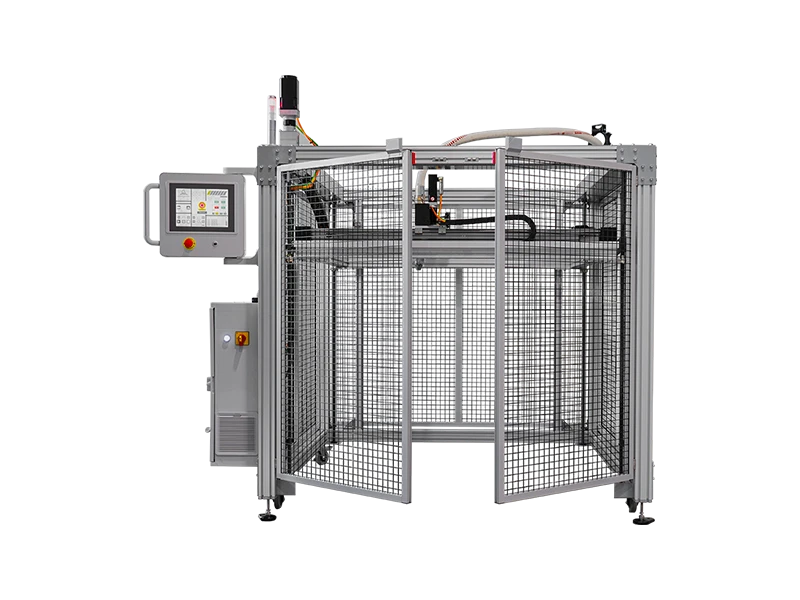
 MiniPrinter EDU
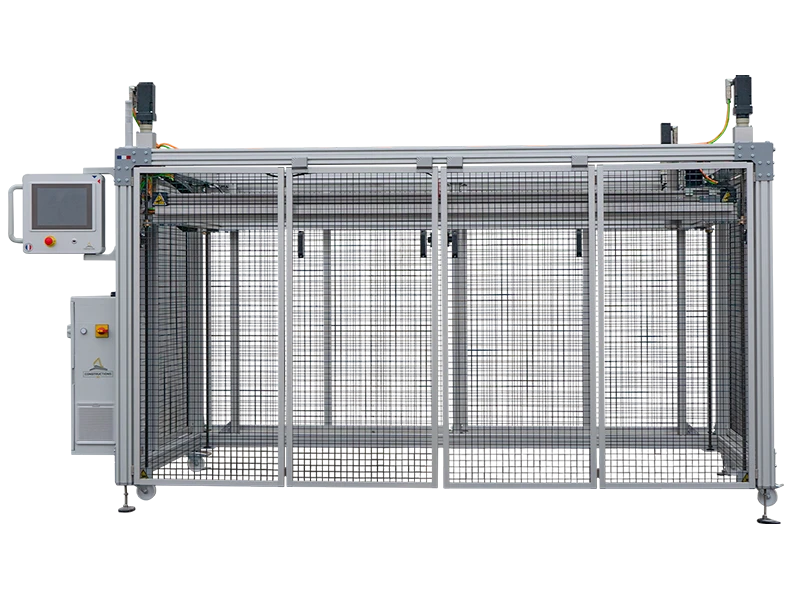 MiniPrinter XL
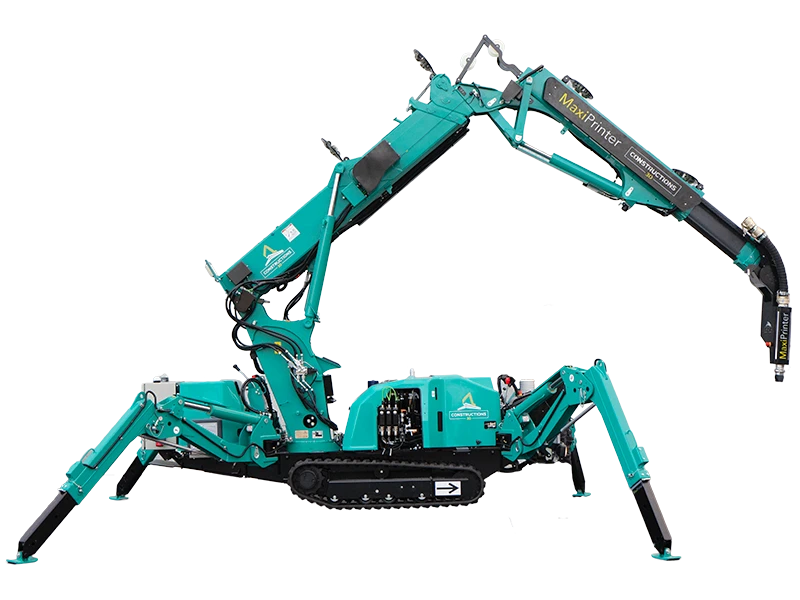 MaxiPrinter
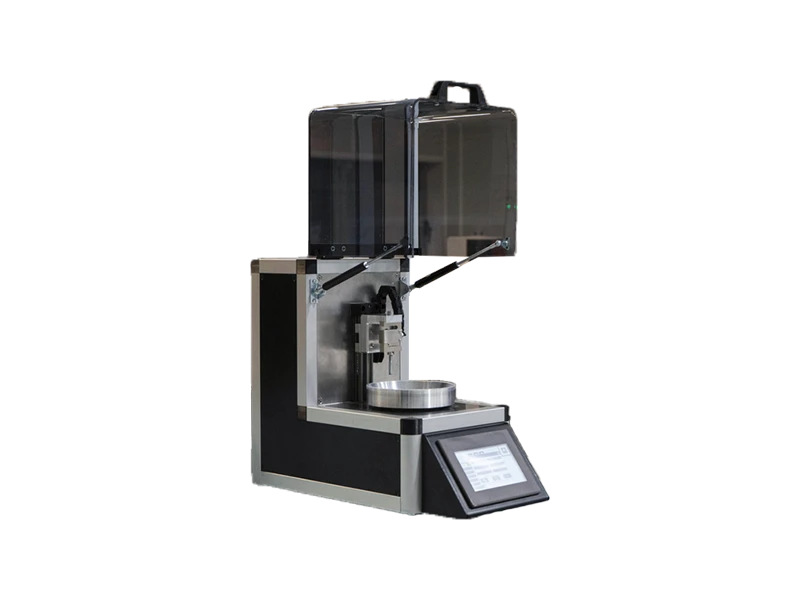 Constructimeter
 Laboratory
 Printable Mortar
 Buildings
 Urban Furniture
 Technical Work
3D printing: a solution to address global inadequate housing
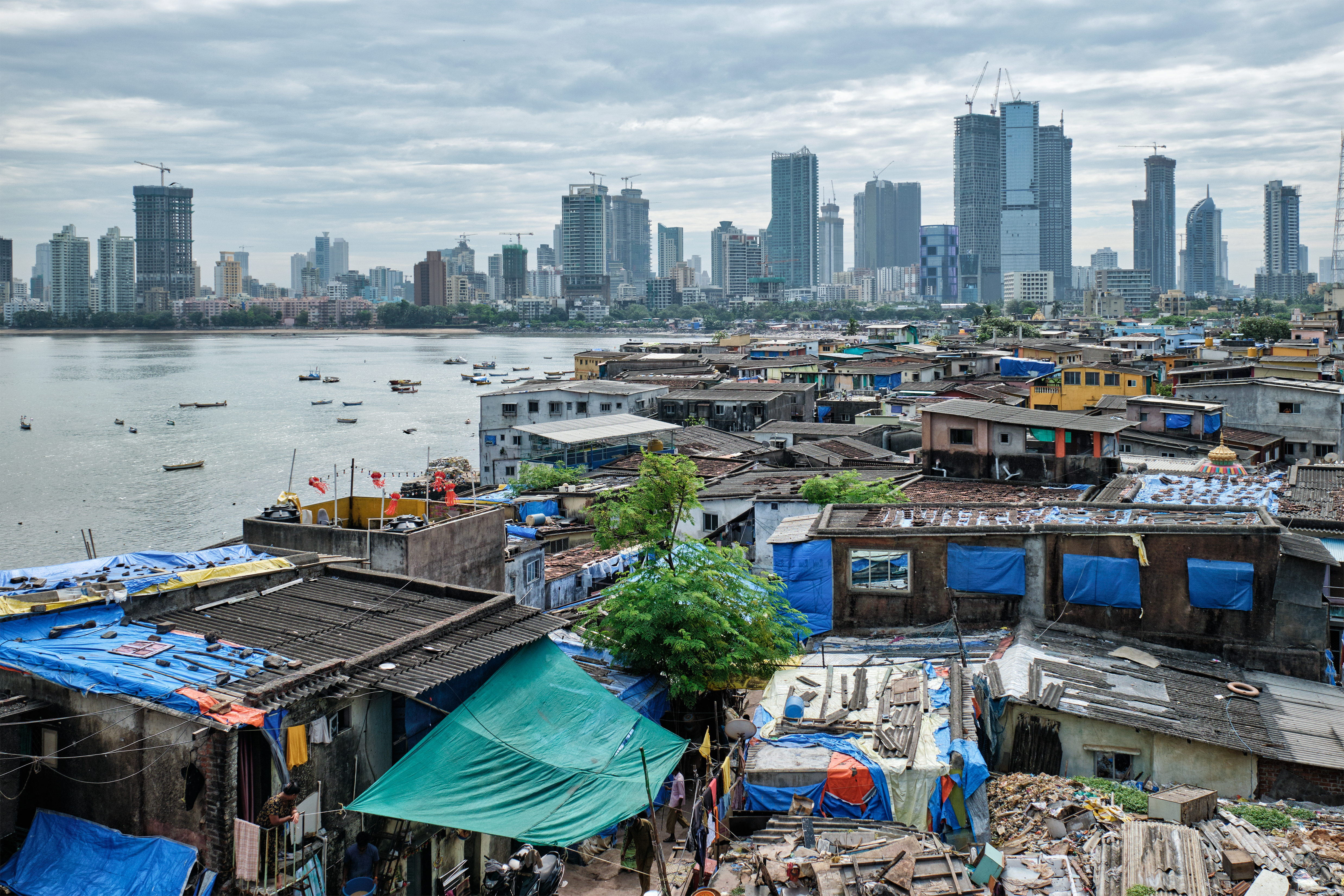
2.8 billion people today live in inadequate housing. More than one billion live in slums. In Europe, one in four people lives in conditions that can harm their health or safety. Everywhere, housing — a basic need for security and dignity — is becoming a luxury. Faced with climate disasters, armed conflicts, and structural poverty, traditional construction methods can no longer keep up. Too slow, too expensive. It’s time to reinvent the way we build. Constructions-3D believes that 3D concrete printing can offer solutions to the global inadequate housing crisis.
Published on 9 December 2025
What does inadequate housing actually mean?
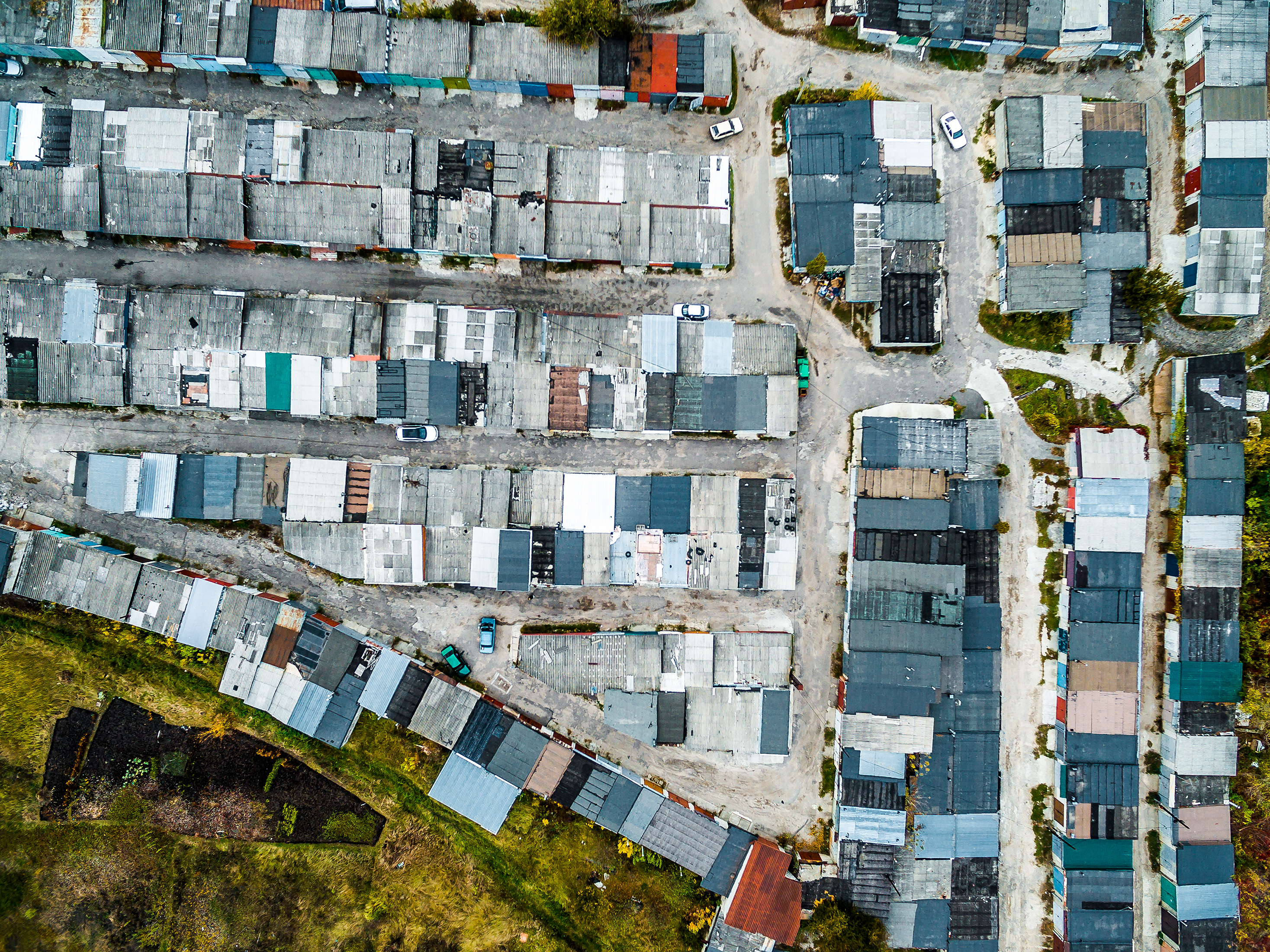
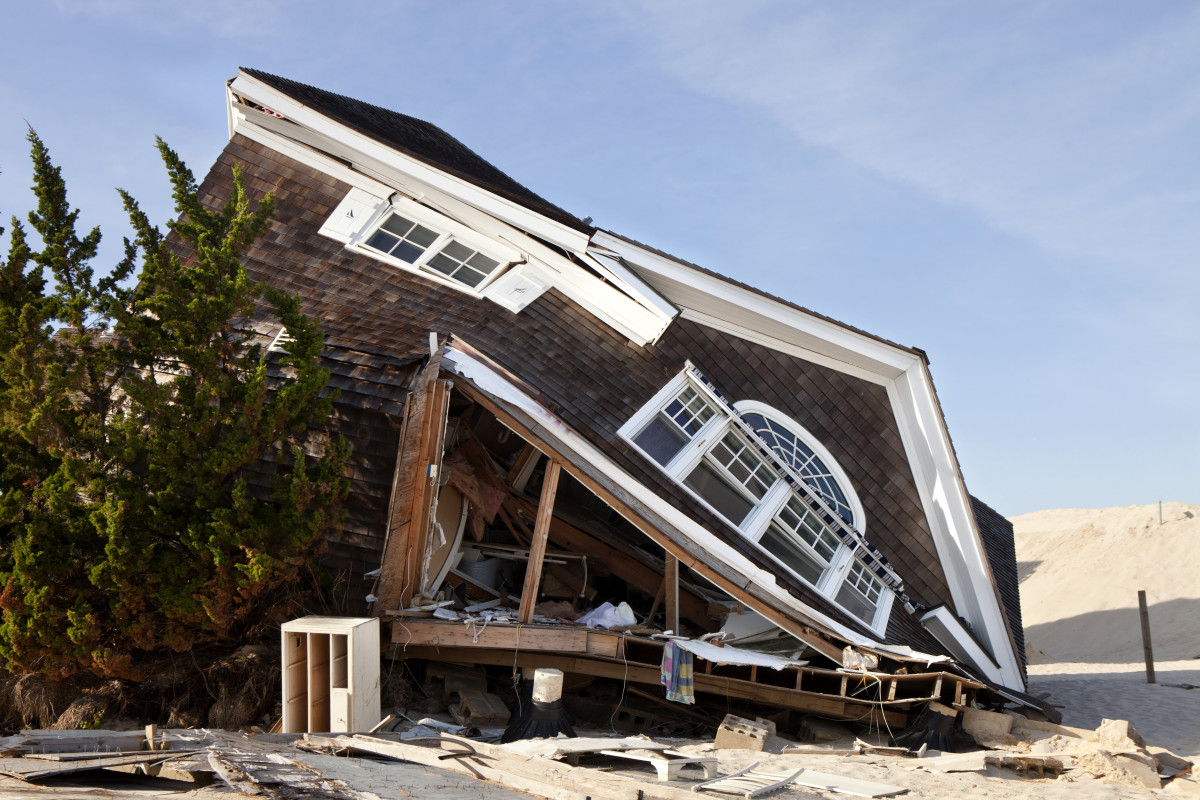
Talking about inadequate housing means describing all the situations where a roof exists… but doesn’t truly protect. It refers to the complete absence of housing — sleeping outside and relying on emergency solutions — but also to living in informal shelters built from salvaged materials.
Inadequate housing goes far beyond that. It also includes living in an apartment that is unsanitary, dangerous, damp, or simply too small for the entire family; living in precarious rentals where eviction can happen overnight; squats and illegal sublets; or rents that consume an ever-growing share of household income.
And then there are homes that no longer meet people’s needs — too far from essential services, unusable as one ages, or inaccessible for people with disabilities.
In short, all these different situations share one thing in common: the home no longer fulfills its role as a safe, stable, and dignified place to live.
In a few key figures…
According to a recent UN-Habitat report (the UN agency responsible for housing and sustainable urban development), nearly 2.8 billion people worldwide live in inadequate housing today. The same agency reports that around 1.1 billion people reside in slums or informal settlements, while at least 318 million people are believed to lack stable housing altogether. As the Brussels Times highlights, one in four people lives in conditions that may harm their health or safety.
To this already alarming structural reality comes the growing impact of natural disasters and conflicts. According to the Internal Displacement Monitoring Centre (IDMC), 83.4 million people were internally displaced in 2024, including 9.8 million due to hurricanes, floods, or fires, and 73.5 million as a result of violence or war. ReliefWeb reports that the same year saw 45.8 million internal displacements caused by climate-related disasters — a historic record.
In the United States, as noted by the IDMC, hurricanes, wildfires, and flooding forced over 11 million people to leave their homes, while a BFM TV investigation revealed that 770,000 Americans were experiencing homelessness in 2024. Finally, as shown in an investigation by The Guardian, bombings in Gaza destroyed or damaged a significant portion of the residential housing stock, illustrating the devastating impact of conflict on shelter.
Taken together, these figures paint the picture of a global housing crisis far deeper than a simple shortage: it is the combined result of structural poverty, climate instability, and geopolitical violence.
3D printing is radically accelerating the construction sector
3D printing applied to the building sector is profoundly transforming construction methods today. By depositing material layer by layer from a digital model, this technology makes it possible to create complex structures with unprecedented speed and precision. It opens new possibilities in contexts where responsiveness, reliability, and resource efficiency are essential — whether responding to emergency needs, building in hard-to-reach areas, or simply optimizing traditional projects.
The MaxiPrinter is capable of printing a single home — or even an entire village — in record time. It offers a concrete solution for NGOs, governments, and humanitarian organizations that need to build quickly, efficiently, and sustainably anywhere in the world. It can extrude material at up to 250 mm/s, which corresponds to about 14 m² of wall (single layer) per hour. In one real project — the tallest 3D-printed building in the world, built in France (500 m² and 14.14 meters high) — the structure was completed in 225 hours, and with recent technical improvements, it could now be built in just 160 hours.
This large-scale 3D printing technology does more than optimize the construction process — it solves many of the challenges that construction professionals face every day. The MaxiPrinter offers exceptional execution speed. Concrete 3D printing significantly accelerates wall construction. Where a traditional site might require several weeks — or even months — additive manufacturing dramatically reduces timelines. This speed reshapes project management: schedules become more reliable, teams can move on to more projects, and the risks of delays due to weather or complex multi-trade coordination are considerably reduced.
Contrary to common misconceptions, 3D-printed structures are not less robust. On the contrary, the technology enables reinforced geometries and simplifies creative freedom, allowing shapes that are difficult or nearly impossible to achieve with conventional methods. Material is distributed optimally, resulting in greater resistance to mechanical stresses. 3D-printed buildings demonstrate superior resilience to harsh weather conditions as well as extreme events such as earthquakes, hurricanes, or high lateral pressure. This strength opens the door to safer and more durable construction — even in challenging environments or post-conflict reconstruction scenarios.
-
“The first need in Maslow’s hierarchy is safety. But today, this fundamental need is still not being met.” — Antoine Motte, Founder of Constructions-3D.
A societal, economic, and humanitarian revolution in service of the common good
If finding housing has become so difficult, it's due to multiple factors: “Climate change certainly plays a role, but demographics are a major factor too — there are more and more people to house, while construction remains too slow. Family structures have also changed: it used to be common for five or six people to live in the same home; today, people live much more independently,” he explains.
In the face of a global housing crisis that continues to worsen, 3D printing is not a technological gimmick — it is one of the most promising solutions of our time. It enables building faster, at lower cost, and more sustainably, while adapting to both environmental and human constraints.
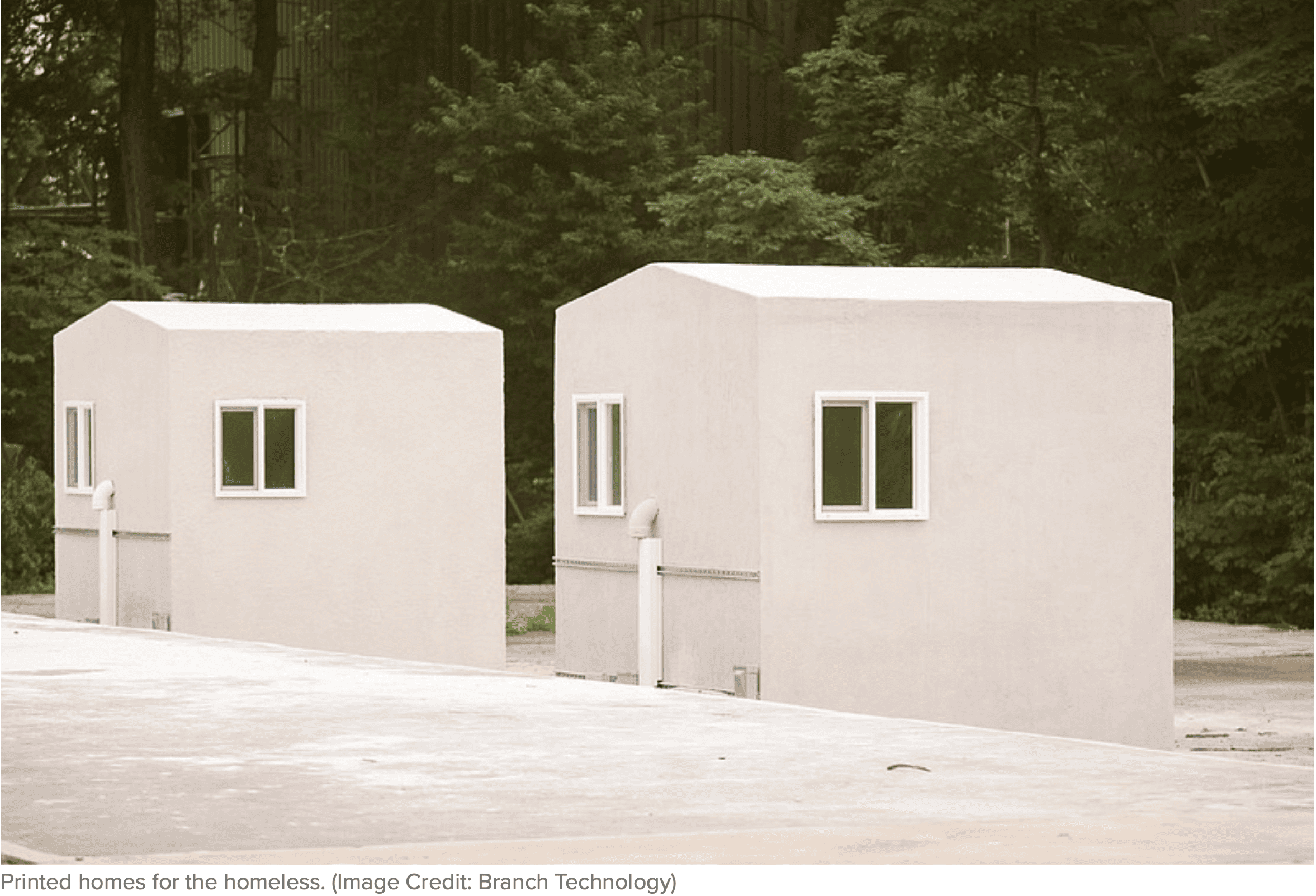
If the MaxiPrinter can increase construction speed while ensuring consistent quality, it also significantly reduces costs.
Thanks to advanced automation and optimized material use, the MaxiPrinter lowers costs on multiple levels: less labor is required for repetitive or strenuous tasks, and waste is reduced. The machine uses only the exact amount of material needed through controlled deposition, and fewer errors or reworks occur — the printer follows digital plans with millimeter precision. In the end, projects cost less without compromising quality or structural strength.
But the challenge goes far beyond technological performance: 3D printing has the potential to reshape construction worldwide. In developing countries, it could replace informal settlements with safe housing, enable rapid rebuilding after natural disasters, reduce reliance on highly specialized labor, and support the use of local materials. In industrialized countries, it eases pressure on social housing systems, supports the building sector’s ecological transition, compensates for labor shortages, and accelerates urban renewal programs. For NGOs, it opens the possibility of a new humanitarian logistics model — printing shelters directly on-site in just a few days for refugees, climate-displaced populations, and victims of war or economic collapse.
3D printing is already transforming housing and rebuilding communities today. So, what are we waiting for to respond to the urgent need for shelter?
Ask your questions about concrete printing and our products...