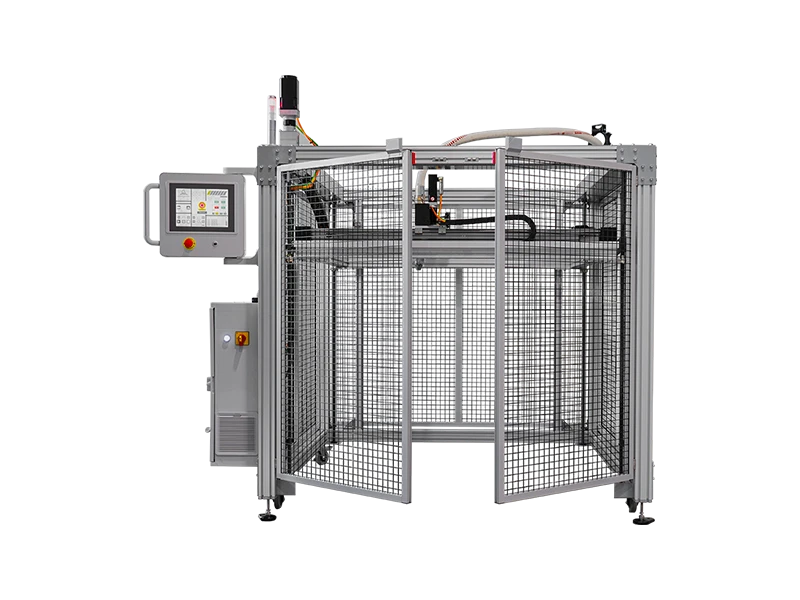
 MiniPrinter EDU
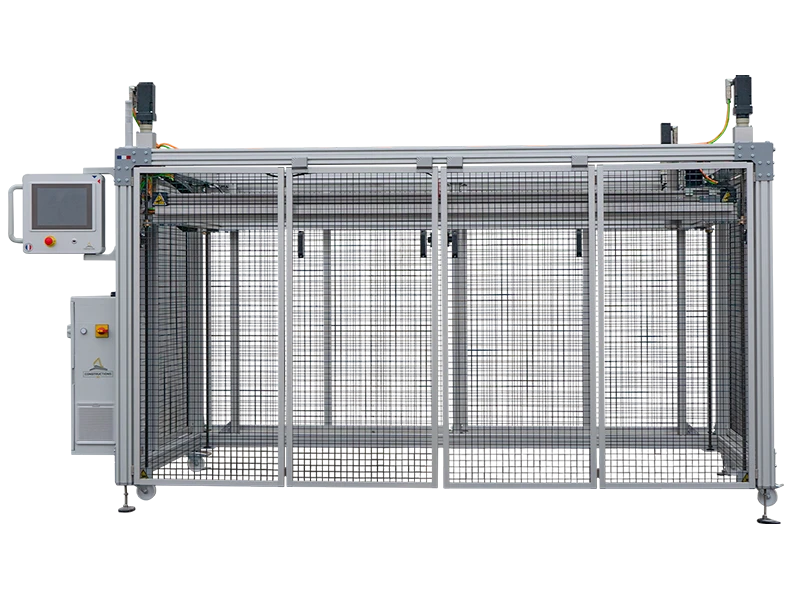 MiniPrinter XL
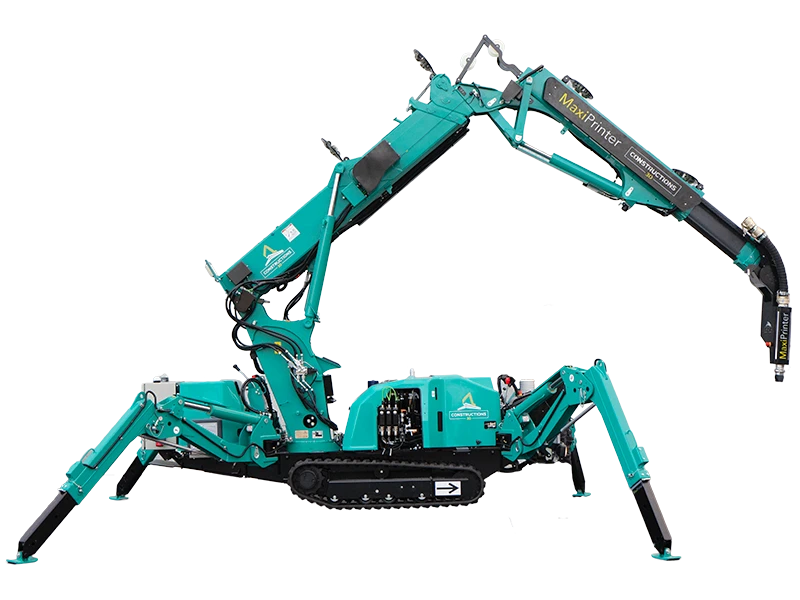 MaxiPrinter
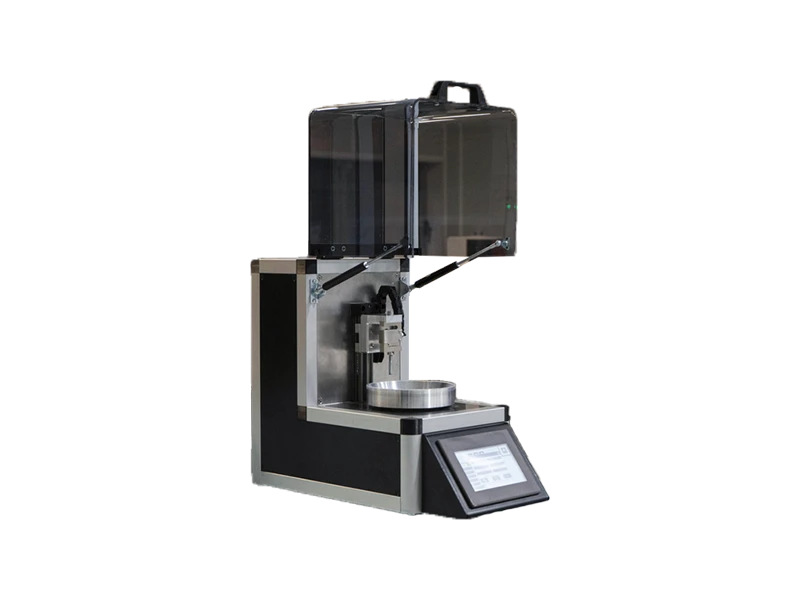 Constructimeter
 Laboratory
 Printable Mortar
 Buildings
 Urban Furniture
 Technical Work
How Does 3D Printing Reduce Physical Strain in Construction?
A revolution is underway on construction sites. 3D printing in the building sector is no longer science fiction. Today, it is fundamentally transforming construction methods, required skills, and working conditions. At Constructions-3D, a French pioneer in 3D printing for the construction industry, this technology provides a concrete answer to one of the sector’s oldest challenges: reducing the physical strain of construction work.
Published on 6 December 2025

Written by Phoebe Karczmarek
Masonry Work: Alarming Figures on Job Hardship
Between 2024 and 2025, one fact has become impossible to ignore in the construction industry: building trades are physically demanding—and the numbers speak for themselves. In France, fatigue, injuries, and physical wear continue to rise: over 24 days of leave on average for long-term sick leave, 56 accidents per 1,000 workers, and nearly 8 million lost workdays—the equivalent of suddenly losing 36,000 workers. And this trend extends far beyond France. In the United States, nearly 70% of workers in high-risk sectors — including construction — report being fatigued on the job; in Canada, more than 1 in 3 construction workers reports high stress levels; and in the United Arab Emirates, extreme heat and long hours contribute to chronic fatigue and increased physical strain. Everywhere, the same truth is emerging: this essential trade wears people down, and earlier than ever.
But behind these statistics lies an often invisible human reality: accumulating exhaustion, morning pain, constant noise, awkward postures… and a shortened future that many end up accepting. In construction, hard work doesn’t stay on the jobsite — it costs years of life. In France, workers exposed to physically demanding tasks can retire up to two years earlier than the legal age; in Canada, jobs with “high physical load” are among those with the most early exits due to health issues; and across many regions, older workers say they can no longer keep up, citing fatigue, musculoskeletal pain, and sometimes even symptoms of depression. The wear and tear is no longer theoretical — it’s lived every day.
For society, the bill is enormous. In France, a single serious accident can exceed €40,000. In North America, the social cost of injuries and fatigue reaches tens of billions of dollars every year. But what these numbers fail to capture is the essential: the energy burned out, the careers cut short, and an industry that struggles to attract younger generations. Young people see these conditions and often turn away from a trade that is nevertheless vital.
It is in this context that additive construction technologies are no longer a futuristic innovation — they have become a human necessity. Reducing physical strain means safer movements, less exhausting days, longer careers… and restoring health, time, and pride to the people who build our world.
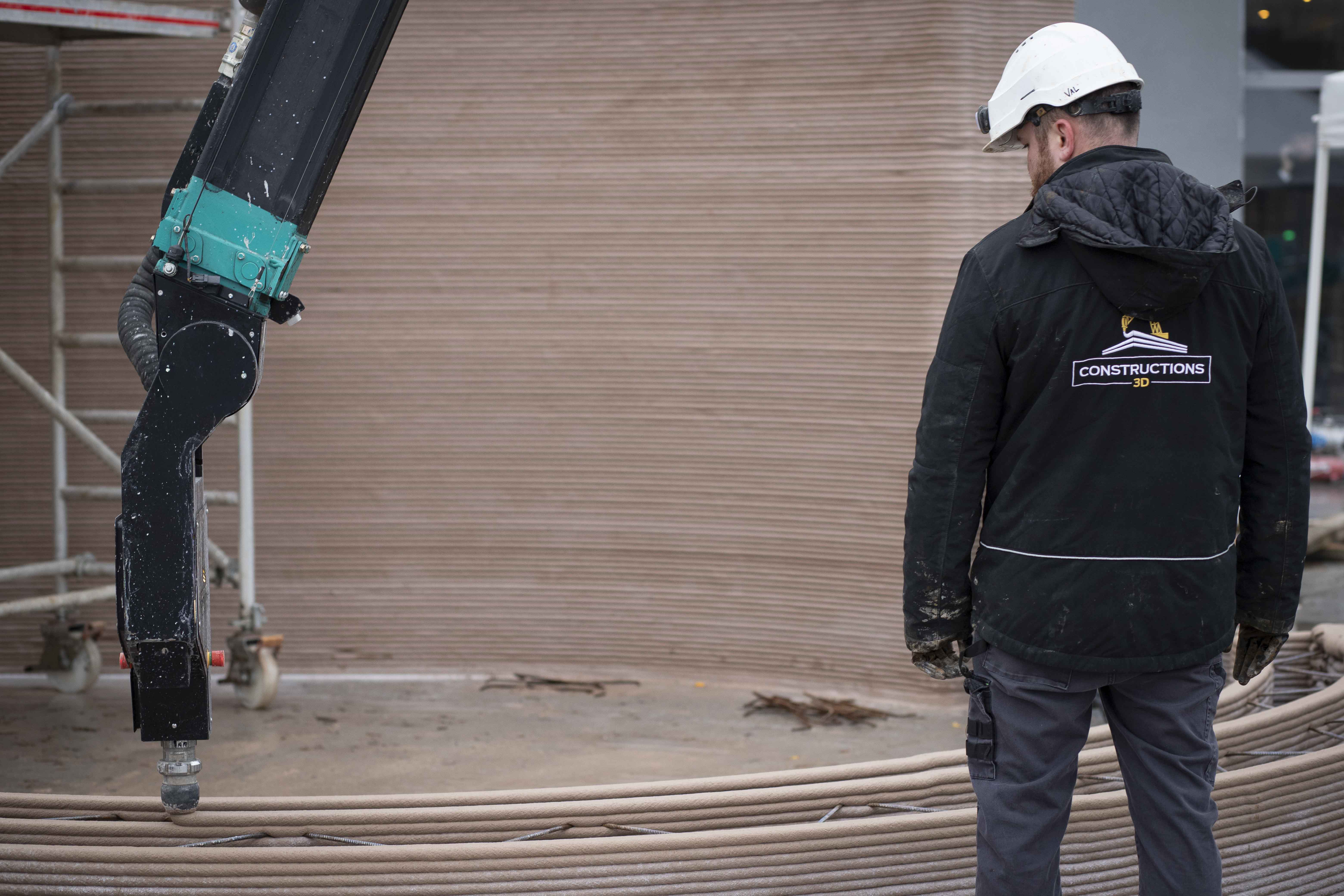
We no longer build the way we used to. The steady clink of stacked concrete blocks, the endless back-and-forth, the aching shoulders at the end of the day… all of this is slowly fading, giving way to an entirely different scene. On the edge of the jobsite, the MaxiPrinter begins to move, laying concrete with almost choreographed fluidity. Where it once took hours of repeated effort, it now completes a wall in a fraction of the time — without a single strained back, without a single damaged hand. Humans no longer fight against the material: they guide it, direct it. A new way of building is emerging, bringing fresh air — and a future — back into the trade.
From Mason to 3D Operator: A Trade in Transformation
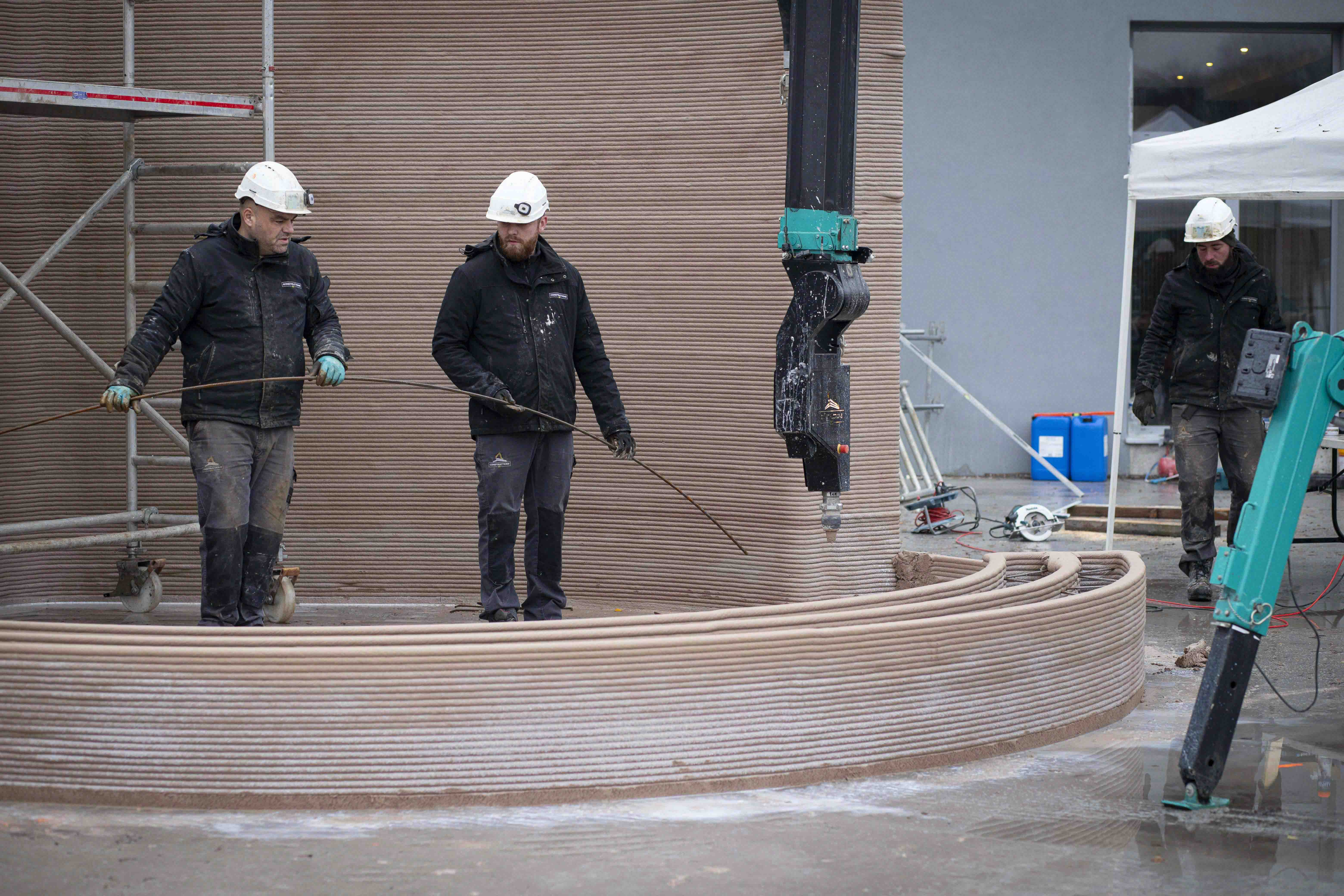
“I started out as a print operator,” explains Mickaël Deleplanque, now Production Director at Constructions-3D. In just five years, he has watched the technology evolve — and with it, the skills required on construction sites.
“There are several profiles: the person who converts the building plans into a 3D file, the one who operates the machine on-site, and the one who handles layout and setup. The first works on a computer, the second prepares the machine, positions it, and launches the print, and the third manages formwork, reinforcement, embeds, and elevation adjustments.”
The mason has not disappeared — he has evolved. His expertise in layout, leveling, reinforcement, and site setup remains essential. But the physical strain has decreased: less lifting, less formwork, fewer repetitive tasks.
The Machine: An Ally to Reduce Physical Strain
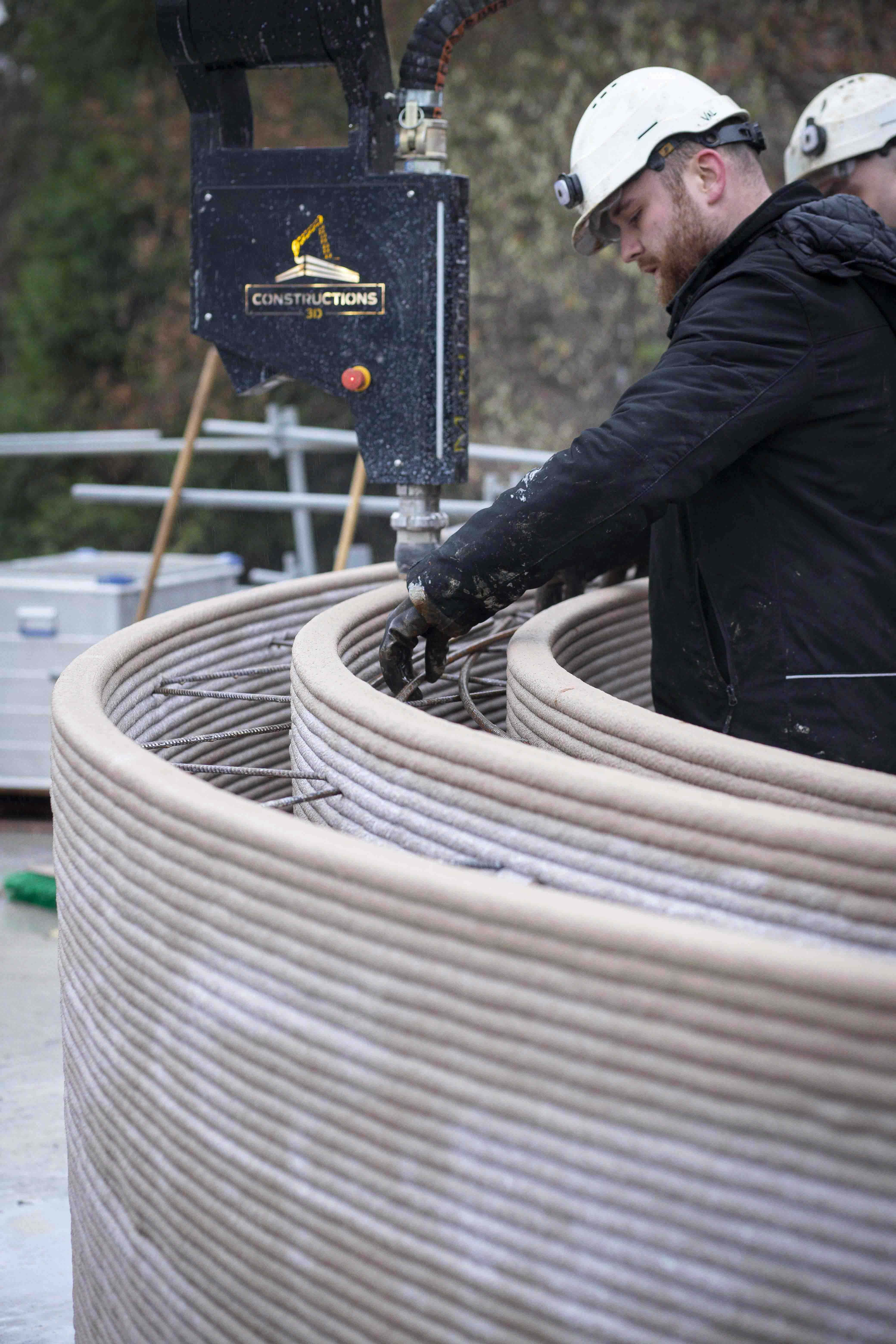
On the jobsite, the 3D printing machine builds the concrete walls layer by layer. Meanwhile, workers can focus on higher-value tasks. “The most physically demanding part of the job — heavy lifting, repetitive motions — is now automated. The crew leader handles digital positioning, and skilled workers manage openings and leveling.” The result: less fatigue, fewer injuries, and reduced physical strain.
And above all, a more balanced distribution of work across the different trades involved in structural construction.
Growing Confidence
Like any innovation, 3D printing has sparked its share of doubts. Traditional masons have sometimes feared being replaced by machines. “It’s a concern we hear often: the fear of killing jobs. In reality, the machine doesn’t replace the trade — it transforms it. It eliminates the most physically demanding tasks and attracts new profiles who are more comfortable with digital tools.”
Given the labor shortage in the construction industry, this technology is even emerging as an opportunity to inspire a new generation to move toward structural work.
A New Construction Standard: More Human, More Technological
By reducing physical strain and elevating workers’ expertise, 3D printing doesn’t aim to dehumanize the jobsite — it aims to reinvent it. It creates a bridge between the strength of craftsmanship and the precision of digital tools. And ultimately, that may be its greatest achievement: putting people back at the center of innovation while building faster, better, and more sustainably.
Ask your questions about concrete printing and our products...